Formosa Azalea's Botanical Name and Native Range Explained
Picture a wooded hillside in eastern Asia in spring, with wild azaleas in bloom among the trees. Then ask a plain question: is anything growing there the plant sold as Formosa? Three different Latin names appear on Formosa tags and websites, and that number is why the question is so hard to answer. Each name is partly right, and none tells the whole story.
Getting this straight matters for practical reasons. The name you search, record or print on a label decides which care sheets you find, and a mixed-up name sends you to advice written for a different plant. In this article, we'll go through what the Formosa name means, how the indicum, simsii and Azalea indica labels relate to it, whether it grows wild anywhere, and what pollinators do with its flowers.
Is Formosa Azalea Really From Formosa?
Formosa is an old European name for Taiwan, so the natural assumption is that this azalea comes from there. One of the most common questions we get is whether it is a Taiwan native.
None of the sources we rely on says so. 'Formosa' is a cultivar of Rhododendron indicum, a species native to Japan, and the wild Rhododendron simsii is native to Burma, Thailand and China. Taiwan appears in neither range.
What a Cultivar Name Records
A cultivar name is a label given by whoever selected or raised the plant. It does not have to describe where the plant's wild ancestors grew, and 'Formosa' tells you the plant was named, not where it came from. Southern Indica hybrids are garden-bred azaleas of Asian ancestry. That is why we call Formosa a Southern Indica hybrid of Asian origin, and not a Taiwan native or a North American one.
What the Sources Do and Do Not Say
The evidence is easy to summarize, and the gaps matter as much as the findings.
- The wild species named in our sources come from Japan (indicum) and from Burma, Thailand and China (simsii).
- No source we use places a wild ancestor of Formosa in Taiwan, so the Taiwan story is an assumption drawn from the name.
- The word Formosa in the cultivar name is a label, not a locality, and it should not be read as a range.
Rhododendron Indicum Does Not Settle the Name
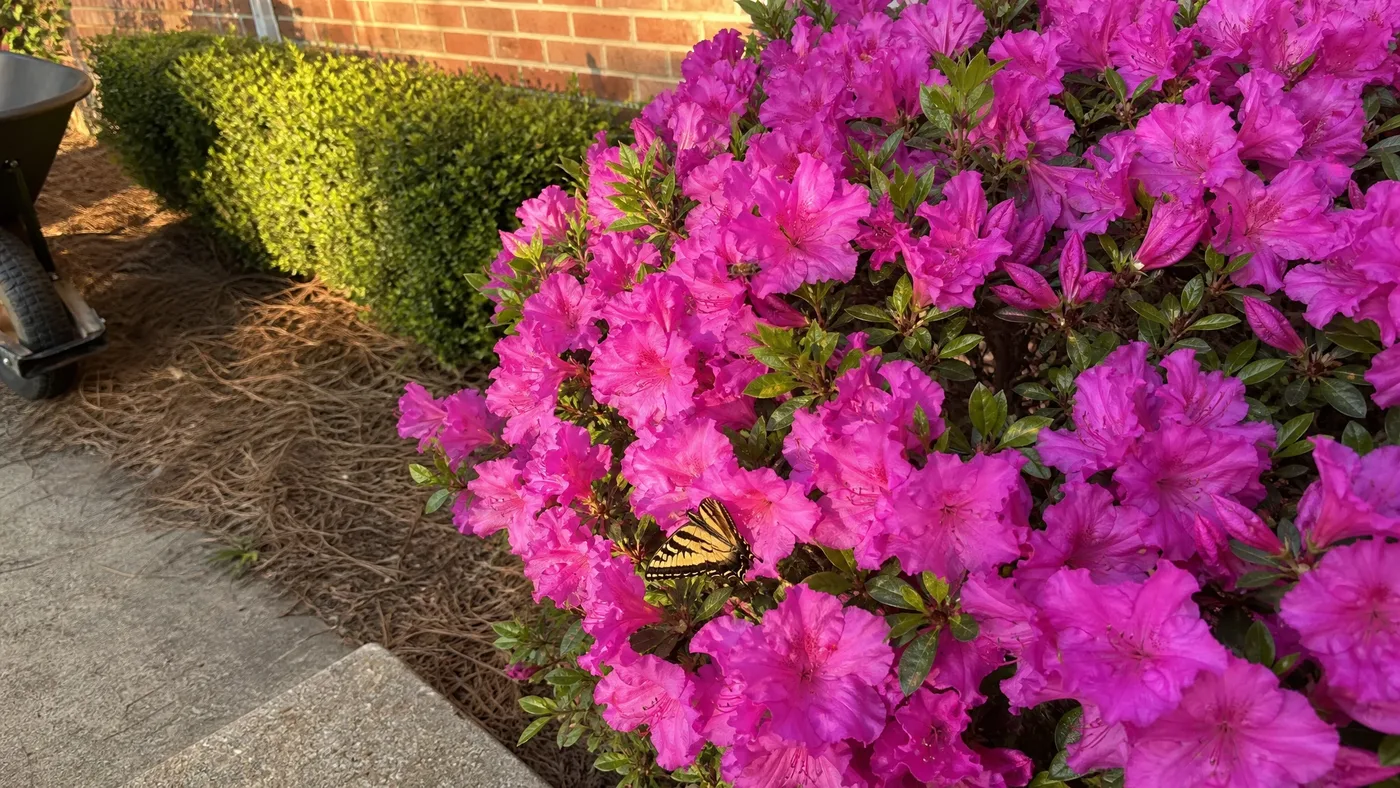
Rhododendron indicum is listed with 'Formosa' as a cultivar, with lavender pink flowers and sun tolerance, and the species is called a small, semi-evergreen shrub native to Japan.
That is why so many nurseries print Rhododendron indicum 'Formosa' on the tag. It is a reasonable label, but it is loose. It names a wild Japanese species, while the plant in your yard is a hybrid that was bred and selected in gardens.
The size gap shows the difference. The species is described as small, but the Southern Indica hybrid group that Formosa belongs to runs 6–12 feet tall and 6–8 feet wide. If you plant for a "small shrub" because the tag says indicum, you will be surprised, and our mature size guide shows what to plan for instead.
The flower color is described differently too. The species listing says lavender pink, while 'Formosa' is also described as magenta. Both describe a purplish pink, and neither description is wrong. We treat indicum as a pointer to the plant's family, not as a final answer.
Simsii and the Wild Relatives of Formosa Azalea
The second label, Rhododendron simsii, is the wild Indian azalea. Its native range is Burma, Thailand and China, and the species was a common parent for Indica hybrids. That makes simsii a relative or ancestor of the group, which is a different thing from being Formosa itself.
Parentage Is Not Identity
A child is not its parent, and the same holds for hybrid shrubs. Calling Formosa "Rhododendron simsii" is like labeling a cultivated apple with the name of a wild apple species. The label points at a real ancestor but gives the wrong plant. Our sources do not trace Formosa's exact parentage, so we do not claim one. We say only that simsii sits in the background of the Indica hybrids as a group.
Four Names and What Each Means
This table sets out what each name stands for according to the sources above.
| Name | What it is | Native range in sources |
|---|---|---|
| Rhododendron indicum | Wild species | Japan |
| Rhododendron simsii | Wild species, parent of Indica hybrids | Burma, Thailand, China |
| Rhododendron 'Formosa' | Southern Indica hybrid cultivar | None of its own |
| Azalea indica | Old trade name | Not a species |
Azalea Indica Is Not a Real Species Name
"Azalea indica Formosa" is the oldest label on this list, and it comes from a time when azaleas were filed in their own genus. Azalea indica is a former name of Rhododendron indicum, and Azalea indica Sims is a synonym of Rhododendron simsii.
One old name has therefore been attached to two different wild species, which tells you it was never a firm identification. Azaleas are now filed under Rhododendron.
The word "Indica" has not disappeared, and this is the part that confuses buyers. It lives on in "Southern Indica hybrids," a group name used for the large-flowered azaleas Formosa belongs to. That use is fine, because it names a group of garden hybrids. What no longer works is "Azalea indica" as if it were a species you could look up and find growing wild.
We would still not tell anyone to throw away a tag that says Azalea indica. The plant is the same, and the older name is a habit that nurseries have carried forward for decades. Just do not copy it into your own records.
Does Formosa Azalea Grow Wild Anywhere?
No. Formosa is a cultivar, a plant maintained in gardens and nurseries, and it has no native range of its own. The wild species behind its family have ranges in Asia, but a cultivar exists wherever people propagate it.
If someone asks where Formosa is native, the honest answer is that the question does not apply to it. The nearest true answer is the Asian ancestry of its group.
Where It Grows Is Not Where It Comes From
What we can say is where it performs. The Southern Indica group grows in zones 6a through 9b, and our hardiness zones guide goes into the edges of that range. That is a statement about garden tolerance, not about origin. A shrub can thrive in a place it has never lived in the wild.
A Note for Native Plant Gardeners
Formosa is not a North American native, and it should not be filed with the native azaleas of the eastern United States. If your garden plan is built around native plants, treat Formosa as a well-loved ornamental, not a substitute. Our sources do not report it spreading into wild areas, and we would not describe it that way. If that concern applies to you, check with your local extension service.
Pollinators Visiting a Formosa Azalea in Bloom
This is the claim we are most careful with. Formosa flowers in late March to early April, and our bloom time guide covers how the timing shifts by zone.
Big magenta flowers on a bare-ish spring shrub look like an invitation, and plenty of web pages promise bees, butterflies and hummingbirds by name. None of the sources behind this guide document which insects or birds use this cultivar.
Two claims do not hold up. The first is that Formosa is a "native pollinator plant," since it is not native to North America. The second is a confident species list for Formosa in particular, because without a study it is a guess dressed as fact. What is reasonable is that any open flower in early spring may attract whatever insects are flying in your area, and that visitors will vary by region.
One thing we can cite is browsing. Southern Indica hybrids are frequently damaged by deer, so a hungry deer is a regular visitor in many yards. If you want real data, watch a flowering branch on a mild, bright morning and write down what lands. Your own notes will be more reliable than a copied list.
A Name Worth Using for Formosa Azalea
Our position is simple. Use "Formosa azalea" in plain writing, and use Rhododendron 'Formosa' when you need the botanical form. Leave out the species word entirely, because indicum and simsii are each only loosely accurate for this plant. Add "Southern Indica hybrid" when you want to say what kind of azalea it is. Our guide to Southern Indica cultivars uses the same naming pattern when it sets Formosa beside its relatives.
If you are copying a name from a nursery listing or a university page, you will probably see Rhododendron indicum 'Formosa'. Keep it in a note as a source quote, but do not make it your own label. For garden maps and plant records, note where and when you bought the plant too, since the seller's tag is the only link back to where the name came from.
A short test helps. If a label includes a species epithet, ask whether the plant is a wild species or a cultivar, and in Formosa's case it is a cultivar. Drop the epithet and nothing true is lost.
One Name for Formosa Azalea Labels and Records
Formosa is a Southern Indica hybrid of Asian origin, not a Taiwan native and not a North American one. Rhododendron indicum names a Japanese species, Rhododendron simsii names a wild relative from Burma, Thailand and China, and Azalea indica is an old trade habit. As a cultivar, Formosa has no native range of its own.
For labels and records, we recommend one form every time: Rhododendron 'Formosa', written plainly as Formosa azalea.
Formosa Azalea
Nursery-grown Formosa Azalea in sizes from 1 Gallon, shipped to your door.
From $29.95
Shop Now →Our Formosa grows in rows of acidic, fast-draining soil, shaded by dappled light, which suits a Southern Indica hybrid with Asian roots. Each shrub we ship comes out of those same rows, so the name on its tag is one we know firsthand. Once you have settled on Rhododendron 'Formosa' for your records, come see our Formosa Azaleas and choose one for your garden.