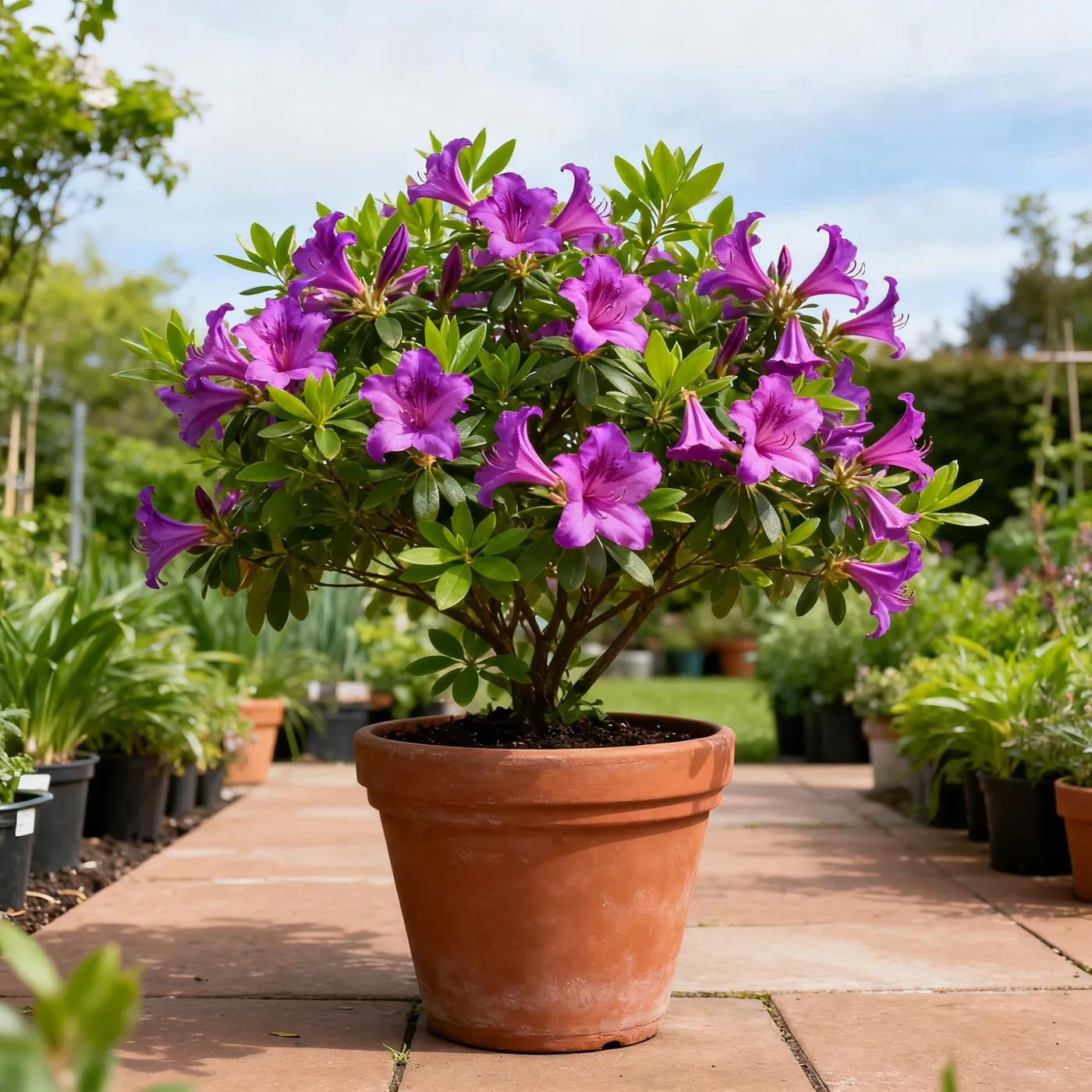
Formosa Azalea
Rhododendron 'Formosa'
Nursery-Grown Formosa Azalea, Early-Spring Magenta Blooms
This size is not in the online store yet. Ask about availability and we will reply with current stock.
- Vivid magenta-purple spring blooms create seasonal focal points
- Evergreen foliage and moderate growth suit foundation and border plantings
- Adapts to partial-shade gardens where many flowering shrubs struggle
About this plant
Formosa azalea is a broadleaf evergreen shrub prized for its vivid magenta-purple flowers in early spring, typically March through April. It thrives in partial shade with morning sun and afternoon protection, making it ideal for woodland gardens, foundation plantings, and mixed borders. Once established, it grows at a moderate pace and reaches 6 to 10 feet tall.
You receive a nursery-grown plant in its container, ready to plant immediately. Prepare a spot with acidic, well-drained soil rich in organic matter. Plant at the same depth it sits in its pot, water thoroughly, and apply mulch around the base to retain moisture and keep roots cool. Water regularly during the first growing season.
Formosa Azalea at a glance
| Botanical name | Rhododendron 'Formosa' |
|---|---|
| Plant type | broadleaf evergreen shrub |
| USDA zones | 7-10 (some nurseries list 7b-10; performs best in 8-10) |
| Mature height | 6-10 ft, older/unpruned specimens can reach 10-15 ft |
| Mature width | 6-8 ft, similar to height with age |
| Sun | partial shade to filtered sun; ideal is morning sun with afternoon shade — full sun in hot/humid climates stresses foliage, full shade reduc |
| Water | regular, even moisture; not drought tolerant while young, appreciates mulch to keep roots cool and moist |
| Bloom time | early to mid spring, typically March-April (varies with zone/region) |
| Bloom color | vivid magenta-purple / orchid-pink, funnel-shaped single blooms |
| Growth rate | moderate, roughly 1-2 ft per year once established |
| Deer resistance | low — azaleas are frequently browsed by deer |
| Best planting time | fall (preferred in mild-winter zones) or early spring |
Container sizes explained
| #1 / 1 Gallon | A trade one gallon pot (about 6.5 inches). One to two seasons older than a quart, with an established root system. |
|---|---|
| #2 / 2 Gallon | A trade two gallon pot. Common for peonies and perennials that need root room; usually blooms the first or second year. |
| #3 / 3 Gallon | A trade three gallon pot (about 10 inches). A well-developed shrub or small tree, often 2 to 4 feet tall on arrival. |
Questions before you buy
Should I choose the 1 Gallon or 3 Gallon size?
The 1 Gallon is a younger plant at a lower cost and will flower the first spring after planting. The 3 Gallon is more mature and fills garden space sooner. Both reach similar size eventually with proper care.
When should I plant this after arrival?
Plant immediately upon arrival, ideally in spring before peak heat or in fall. Early planting gives the roots time to establish before summer. If you must delay, keep the soil consistently moist and provide partial shade.
How large does a mature Formosa azalea get?
Expect 6 to 10 feet tall and 6 to 8 feet wide at maturity, reached in roughly 8 to 10 years. Older or unpruned specimens can reach 10 to 15 feet tall. Pruning after bloom helps control size and shape.
What sun and shade conditions does it need?
Formosa azalea thrives in partial shade with morning sun and afternoon shade. Full sun in hot climates stresses the foliage, while full shade reduces flowering. Dappled or filtered light under trees is ideal, especially in warmer zones.
Which USDA hardiness zones does this plant suit?
This azalea grows in zones 7 to 10, with best performance in zones 8 to 10. In zone 7, select a protected microclimate and mulch heavily in winter. In zone 11 or warmer, it may struggle in sustained heat.
What care does it need in its first year?
Water regularly to keep soil evenly moist during the first growing season and apply mulch to retain moisture. Avoid heavy fertilizing in year one, letting the plant establish itself. The plant is toxic to pets and children if ingested.