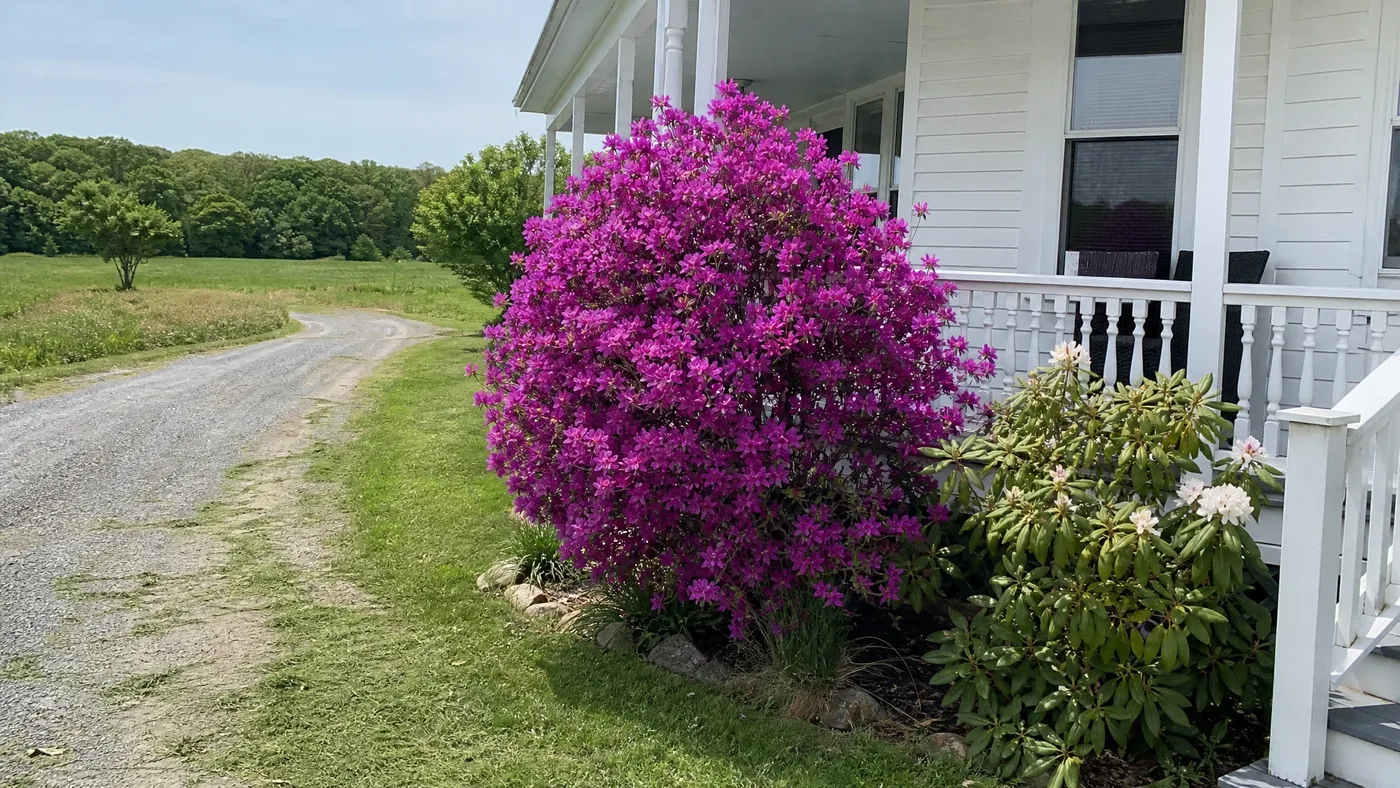
Azalea vs Rhododendron: What Makes Formosa Azalea Different?
One spring we keep coming back to had a mountain rhododendron still carrying its blooms high on the ridge, weeks after the azaleas by the porch had let their petals fall onto the steps. Both plants answered to the same genus name the whole time, and the gap between what a tag says and what a plant is has followed us through nearly every spring since.
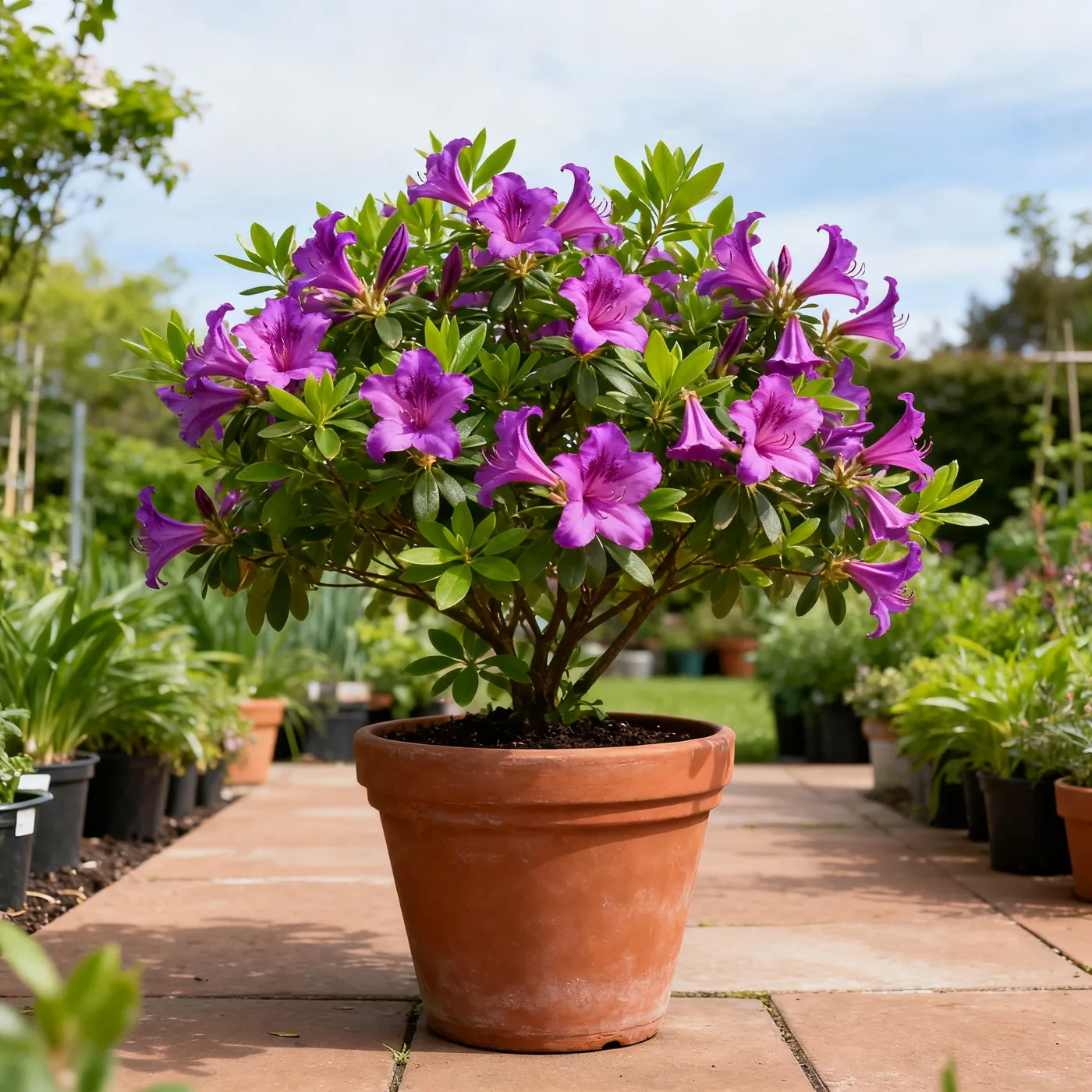
We'll walk you through where each plant tends to live in a landscape, then the flowers, the stamens, the leaves and the way each one handles frost, before settling the naming with Formosa Azalea as the worked example. Every step is a check you can make on your own shrub, and it matters because the soil, the light and the pruning advice you follow all depend on knowing what you are actually growing.
Rhododendron on the Ridge, Formosa Azalea by the Porch
Stand a mountain rhododendron beside a porch azalea and the first difference has little to do with the flower, because it is the setting that tells the story. The ridge plant grew in open air among taller trees and took its time. The Formosa by the porch opened early, in the shelter of a wall, and was finished before the ridge had properly woken up.
That early start is built into the group Formosa belongs to. Formosa is a Southern Indica hybrid, and the blooming period for these hybrids begins in late March and extends to early April. In practice that makes it a house-side shrub, planted where you will see it from a window on the first mild days, and our guide to when and how long Formosa Azalea flowers covers the timing in detail.
Size will not sort the two plants for you. Azaleas and rhododendrons share the same typical range, 6 to 10 feet tall and 5 to 8 feet wide, so a big shrub by the porch proves nothing either way.
Where Formosa Azalea Earns Its Place
Light is the first thing to get right at a porch. Light to moderate shade is best, and heavy shade causes weak growth and fewer flowers, while Southern Indica hybrids can also take dappled sunlight and full sun. High branches overhead or gentle morning light suit a Formosa, and a dark corner under a roof overhang is where the flowers tend to go missing.
Test the Soil Beside the Foundation
Soil is the other half of the site. The pH range is 4.5 to 6.0, in well-drained soil high in organic matter, and the ground beside a house does not always match the bed a few steps away. Customers usually ask us why a healthy-looking porch azalea has turned yellow, and the answer is more often the soil than the shrub, so test before you feed or fuss.
Formosa Azalea's Funnel Flowers Against Rhododendron Bells
Turn one open Formosa flower on its side and look at the tube, because that is where the shape shows. Azaleas carry tubular or funnel-shaped flowers, narrow where they join the stem and flaring toward the mouth, while true rhododendrons carry bell-shaped ones that hold their width more like a cup. Formosa sits squarely on the funnel side, and its magenta is a strong color that is hard to mistake across a yard.
Why One Flower Is Not Proof
Garden hybrids blur the edges, and a funnel can look bell-like once it has opened fully or sagged in rain. Look at several flowers of different ages before you decide. Color should not settle it either, since magenta is a trait of Formosa and says nothing about the genus as a whole.
Timing is a softer clue. In our memory the ridge plant bloomed late and the porch plant bloomed early, but bloom dates shift with cultivar and site, so use timing only to confirm what the flower shape already suggests.
When the Real Question Is Which Azalea
Plenty of customers who ask us about rhododendrons are really looking at another Southern Indica hybrid with a similar flower. If that sounds like your situation, our comparison of Formosa Azalea and Pride of Mobile Azalea sorts out the cultivar question, and the stamen count in the next section sorts out the genus question.
Five Stamens Where Rhododendrons Carry Ten
The stamen count is the plainest tell we know, and it needs nothing but good light and a steady hand. Azaleas carry 5 stamens and true rhododendrons carry 10. Stamens are the pollen-bearing parts inside the flower, and the number is part of the plant's structure, so it does not shift with weather or with how well the shrub grew that year.
A Four-Step Count on Your Own Shrub
Do this on a morning when the flowers are fresh, and work from the throat of the flower rather than the petals.
- Pick a flower that opened within the last day or two, since older flowers drop parts and give false counts.
- Hold it up to the light and look down into the throat of the funnel.
- Count the thin stalks that end in small pollen tips, and leave out the single thicker stalk in the center, which is the pistil.
- Repeat on two or three more flowers from different branches and trust the number that comes up most often.
Five on a Formosa confirms it is an azalea. Ten would send you looking at a true rhododendron.
Why the Count Beats Size
Common advice says to judge by the size of the plant, and we would set that aside. The Southern Indica group reaches 6–12 feet in height and 6–8 feet in width, which overlaps the range for the whole genus, and our guide to how big Formosa Azalea gets shows how much room one plant takes. Size describes the site and the years. Stamens describe the plant.
Narrow Leaves Against Broad, Leathery Ones
Pinch a leaf between finger and thumb and you can feel the argument before you can state it. Rhododendron leaves are elliptic with smooth edges, thick and leathery with a glossy surface, and the undersides may be scaly or carry small dots. Azalea leaves run thinner, smaller and hairy, which is the texture you will find on a Formosa.
Turn a leaf over before you decide anything. A rhododendron may show scales or tiny dots on the underside, and an azalea will not, so a quick look at the back of one leaf adds a second check that costs nothing and needs no tools.
What surprises people is that Formosa keeps those thin leaves through winter. Formosa azalea is a large evergreen shrub, to ten feet tall, so the plant has the scale and winter presence of a rhododendron with the leaf of an azalea.
Every Check in One Table
The table pulls the checks from the last three sections into one place, so you can run down it with your own plant in hand.
| Check | Formosa and other azaleas | True rhododendrons |
|---|---|---|
| Flower shape | Tubular or funnel | Bell |
| Stamens | 5 | 10 |
| Leaf feel | Thinner and smaller | Thick and leathery |
| Leaf surface | Hairy | Glossy, underside may be scaly or dotted |
| Winter leaves | Mostly deciduous, many evergreen (Formosa is evergreen) | Evergreen |
Using Leaves as the Tiebreaker
If the flower shape and the stamens leave you unsure, the leaf decides. Thick, glossy and scaly underneath points to a rhododendron, and thin and hairy points to an azalea. Mixed signals are common in garden hybrids, and when they conflict, the stamen count is the one we trust.
How Formosa Azalea Behaves When Frost Comes
The usual rule of thumb says azaleas drop their leaves in winter and rhododendrons keep them, and Formosa is the plant that breaks it. Most azaleas are deciduous but many are evergreen, and Formosa is one of the evergreens, so it stands in leaf all winter like the leathery plant on the ridge.
What Evergreen Leaves Mean in Winter
The Southern Indica group suits zones 6a through 9b, and a plant that keeps its leaves has to face the cold with them. That is why placement matters most near the colder end of the range, where a sheltered porch spot beats an open slope. Our guides to Formosa Azalea hardiness zones and winter care in cold climates go further on this.
One of the most common questions we get is whether a Formosa with browned leaves in January is dead. Not necessarily. Wait for new growth in spring and let the plant show you which wood is alive before you cut anything.
Late Frost and the Spring Buds
The second frost risk is the flowers. Because Southern Indica hybrids open from late March into early April, the buds can swell and open while hard freezes are still possible, and a freeze can brown open flowers while the leaves look fine. In our memory the late ridge plant escaped this by waiting, while the porch plant had already committed. A porch wall softens the cold a little, and a light covering on a forecast frost night is cheap insurance for a shrub in full bud.
Why a Formosa Azalea Is Still a Rhododendron
Everything above comes down to one line from NC State: all azaleas are rhododendrons, but not all rhododendrons are azaleas. Azaleas are a subgroup within the genus Rhododendron, which settles the family question too, since two plants in the same genus share a family. The funnel flowers, the five stamens and the thin leaves are what mark the subgroup, and they sit inside a genus that also holds the leathery plants on the ridge.
What the Botanical Name Says
Read the label this way. Rhododendron 'Formosa' puts the genus first, with a capital letter, and the cultivar name in single quotes. Formosa azalea is also listed as Rhododendron simsii, so even a formal name puts the plant under the genus name, and "azalea" works as the everyday word for the subgroup.
Why Care Follows the Genus
Neither name is wrong. A common name tells you how a plant looks and what people use it for, and the genus name tells you what it is, which is the better guide to care. Azaleas grow best in acid soil, 4.5 to 6.0 pH, that is well drained and high in organic matter, and that is the standard we hold a Formosa to whichever word is on the tag.
One Genus, Two Names, and Formosa Azalea
Call it an azalea at the nursery counter or Rhododendron 'Formosa' on a label, and you are naming one shrub: a funnel-flowered, five-stamened, thin-leafed evergreen that belongs to a genus it shares with the big leathery plants on the ridge. The checks agree with one another, and the old rule that azaleas lose their leaves is the only one that fails.
Come late March, with the ridge still bare and the morning cold, the porch plant opens in magenta against the wall, and the question of what to call it no longer needs an answer.
Formosa Azalea
Nursery-grown Formosa Azalea in sizes from 1 Gallon, shipped to your door.
From $29.95
Shop Now →Our growers watch our Formosa through the year in acid, well-drained soil and dappled shade, looking at leaf color in summer and swelling buds when a late frost is forecast. We are a small team of growers on our own farms, raising top-quality shrubs, and you are welcome to pick out a Formosa Azalea for your own garden.