Formosa Azalea vs Pride of Mobile Azalea: What's the Difference?
If you're shopping for a Southern Indica azalea, you've probably noticed Formosa Azalea and Pride of Mobile mentioned together. Both bloom in vivid shades of magenta and rose, both thrive in zones 7 to 10, and both make excellent foundation plantings. But they're not identical. Here's what separates them, and how to pick the right one for your space.
Quick Comparison Table
| Attribute | Formosa Azalea | Pride of Mobile Azalea |
|---|---|---|
| Mature Height | 6-10 ft (unpruned to 10-15 ft) | Smaller, more compact (check with nursery for exact size) |
| Mature Width | 6-8 ft | Smaller habit than Formosa |
| Growth Rate | Moderate, roughly 1-2 ft/year once established | Moderate (check with local extension) |
| USDA Zones | 7-10 (performs best in 8-10) | 7-10 (confirm hardiness with your zone) |
| Bloom Color | Vivid magenta-purple or orchid-pink | Similar magenta-rose |
| Bloom Time | Early to mid spring, typically March-April | Early to mid spring (confirm for your region) |
| Sun Requirement | Partial shade to filtered sun | Partial shade to filtered sun |
| Soil pH | 4.5-6.0 (acidic) | Acidic (check extension for specifics) |
| Water Needs | Regular, even moisture | Regular, even moisture (likely similar) |
| Spacing | 4-6 ft apart | May differ; check with nursery |
Formosa Azalea: The Larger, Bolder Choice
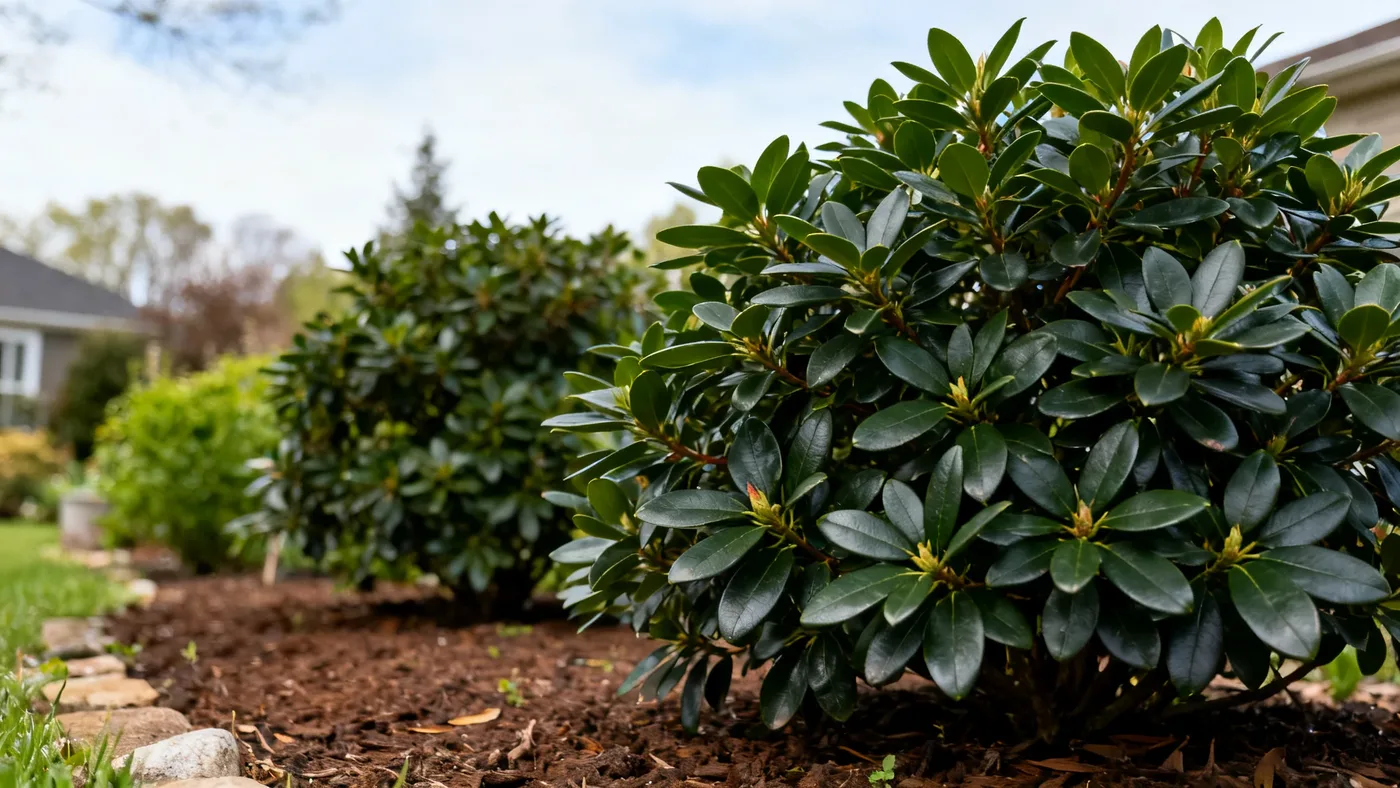
Formosa Azalea (Rhododendron 'Formosa') is a long-cultivated Southern Indica hybrid. It's a substantial shrub, reaching 6 to 10 feet tall and 6 to 8 feet wide at maturity. Older, unpruned specimens can stretch to 10 to 15 feet. This is not a dwarf variety; it commands space.
The blooms are a vivid magenta-purple or orchid-pink, with funnel-shaped single flowers that appear reliably in early to mid spring, typically March through April depending on your zone. The evergreen foliage is dark green, glossy, and dense, providing structure even when not in bloom.
Formosa performs best in zones 8 to 10, though it can survive in zone 7 with careful site selection. It needs partial shade to filtered sun, with morning sun and afternoon shade as the ideal mix. Plant it in acidic soil (pH 4.5 to 6.0) that's humus-rich and well-drained. Space plants 4 to 6 feet apart if mass planting.
Growth is moderate, roughly 1 to 2 feet per year once established. Newly planted specimens are not drought tolerant, so consistent moisture and mulch are essential the first season and beyond. After flowering ends, prune immediately to encourage next year's blooms, since flower buds set on that same season's new growth.
Pride of Mobile Azalea: The Compact Alternative
Pride of Mobile is also a Southern Indica cultivar, bred for a similar climate and care. It shares the magenta-rose bloom color that makes Formosa so striking. The key difference: Pride of Mobile has a generally smaller, more compact habit.
While exact mature dimensions vary by growing region and care, Pride of Mobile stays noticeably smaller than Formosa. This makes it a better fit for foundation plantings where space is tight or where you want a more restrained visual impact. The compact form also means less aggressive pruning to maintain shape.
Like Formosa, Pride of Mobile thrives in zones 7 to 10 (confirm your exact zone with your local extension service). It blooms in early to mid spring and requires partial shade, acidic soil, and consistent moisture. Care and maintenance are essentially the same as Formosa.
Bloom Color: The Similarity That Confuses Gardeners
Both Formosa and Pride of Mobile deliver vivid magenta and rose tones in spring. This similarity is why they're often confused. The flowers appear around the same time, on plants that need identical growing conditions. From a distance, in bloom, they look strikingly alike.
The difference isn't the color itself; it's the canvas. Formosa's larger, more open habit shows off those blooms across a bigger shrub. Pride of Mobile's compact form concentrates the same color into a tighter space, creating a denser floral display.
Size and Spacing: The Real Dividing Line
This is where the two cultivars diverge most. Formosa is a full-sized Southern Indica shrub. At 6 to 10 feet tall and 6 to 8 feet wide, it becomes a significant landscape element. In a small urban garden or tight foundation bed, that scale can overwhelm.
Pride of Mobile's smaller, more compact habit makes it easier to place. It won't dominate a corner bed or crowd out neighboring plantings as quickly. If you're working with limited space or prefer a delicate touch, this advantage matters.
For mass plantings or hedges, Formosa's larger size can be an asset. You'll reach a mature look faster and cover ground more efficiently. Pride of Mobile would require closer spacing to achieve the same effect, increasing plant cost.
Hardiness and Climate Fit
Both cultivars perform best in zones 8 to 10. Zone 7 is survivable for both, but site selection becomes critical: choose a sheltered location with afternoon shade and avoid windy exposures. Check with your local extension service about zone 7 performance in your specific region, as microclimates matter.
In the hotter parts of zone 10, full sun stresses the foliage on both varieties. Morning sun with afternoon shade is ideal. In cooler zone 7 locations, a bit more sun is tolerable if the soil stays consistently moist.
Care and Maintenance
Both Formosa and Pride of Mobile need the same fundamentals: acidic, well-drained soil (pH 4.5 to 6.0); regular, even moisture; mulch to keep roots cool; and immediate post-bloom pruning. Neither is drought tolerant while young.
Feed with an acid-forming azalea or camellia fertilizer in early spring right after bloom. A light second feeding in early summer is optional. Both can develop the same pests and diseases: azalea lace bug, spider mites, petal blight, and azalea leaf gall. Both are toxic to pets and people, containing grayanotoxins.
Pros and Cons
Formosa Azalea
Pros:
- Reaches full landscape impact faster (moderate 1-2 ft/year growth)
- Fills larger spaces efficiently; excellent for mass plantings
- Vivid, reliable magenta-purple blooms year after year
- Long-lived shrub (50+ years with good care)
- Attracts bees, butterflies, and hummingbirds
Cons:
- Requires more space (6-10 ft or taller with age)
- Needs frequent pruning to stay contained
- Heavy pruning required immediately after bloom
- Not suitable for small urban gardens or tight foundation beds
- Intolerant of wet, compacted soil (root rot risk)
Pride of Mobile Azalea
Pros:
- Compact, manageable size fits tight spaces
- Less pruning needed to maintain form
- Similar striking magenta-rose blooms
- Lower maintenance overall than Formosa
- Still attracts pollinators and hummingbirds
Cons:
- Smaller mature size means slower landscape fill for large areas
- Fewer plants needed for impact (potentially higher per-unit cost to cover space)
- Less imposing presence than Formosa in an open landscape
- Still not drought tolerant while young
- Exact size and growth rate vary; confirm with your nursery
Which Should You Choose? Best-Fit Guide
Choose Formosa Azalea if:
- You have a large foundation bed or open landscape to fill
- You're creating a mass planting or informal hedge
- You want fast-growing, substantial impact
- You prefer a bold, commanding shrub in a woodland setting
- You're willing to commit to immediate post-bloom pruning
- Your zone is 8-10 and you have space for a 6-10 ft shrub
Choose Pride of Mobile Azalea if:
- You're working with a small urban garden or tight corner bed
- You want a compact Southern Indica without overwhelming the space
- You prefer lower-maintenance pruning and training
- You need to stay within a specific size constraint
- You want the same magenta-rose blooms in a refined, restrained form
- Your site is zone 7 (confirmation with extension service recommended)
The Verdict
Both are excellent Southern Indica cultivars with vibrant spring blooms and similar care requirements. The choice is not about quality; it's about scale and purpose. Formosa Azalea is the bolder, larger-scale performer. Pride of Mobile is the refined, space-conscious option. Neither outperforms the other; they simply belong in different gardens.
If you're unsure about hardiness in zone 7 or exact spacing for your local conditions, consult your cooperative extension service before planting. They'll have regional data on performance and survival rates.
For more detailed care guidance, see our Formosa Azalea care guide.
Quick Reference: At a Glance
| Factor | Formosa | Pride of Mobile |
|---|---|---|
| Best For | Large spaces, mass plantings, bold impact | Small spaces, tight corners, refined form |
| Mature Height | 6-10 ft (can exceed 10 ft) | Smaller than Formosa |
| Pruning Load | High (post-bloom, shape maintenance) | Lower (naturally compact) |
| Bloom Color | Vivid magenta-purple | Similar magenta-rose |
| Zones | 7-10 (best 8-10) | 7-10 (confirm for zone 7) |
| Growth Rate | 1-2 ft/year (moderate) | Moderate (check locally) |
| Water Needs | Regular, consistent moisture | Regular, consistent moisture |
| First-Year Care | Mulch, don't allow drought | Mulch, don't allow drought |