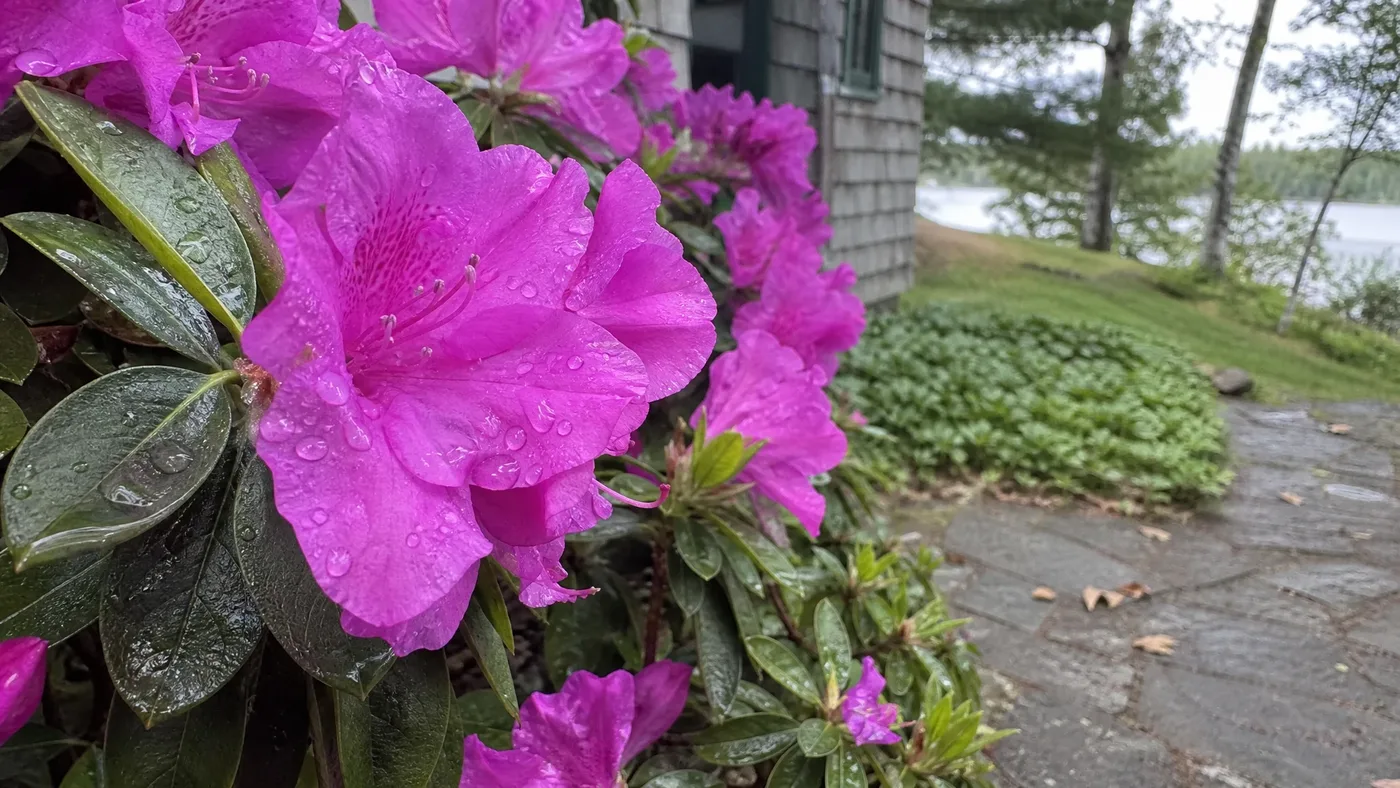
Azalea Lace Bugs on Formosa Azalea: Spotting and Stopping Them
Most people expect a pest to sit on the part of the plant that looks sick. Azalea lace bugs do the opposite. The damage shows on top of the leaf, and the insects stay underneath. So before you read further, pick one leaf from a sick-looking branch on your Formosa, flip it over, and count what you find: dark specks, pale insects and brown spots.
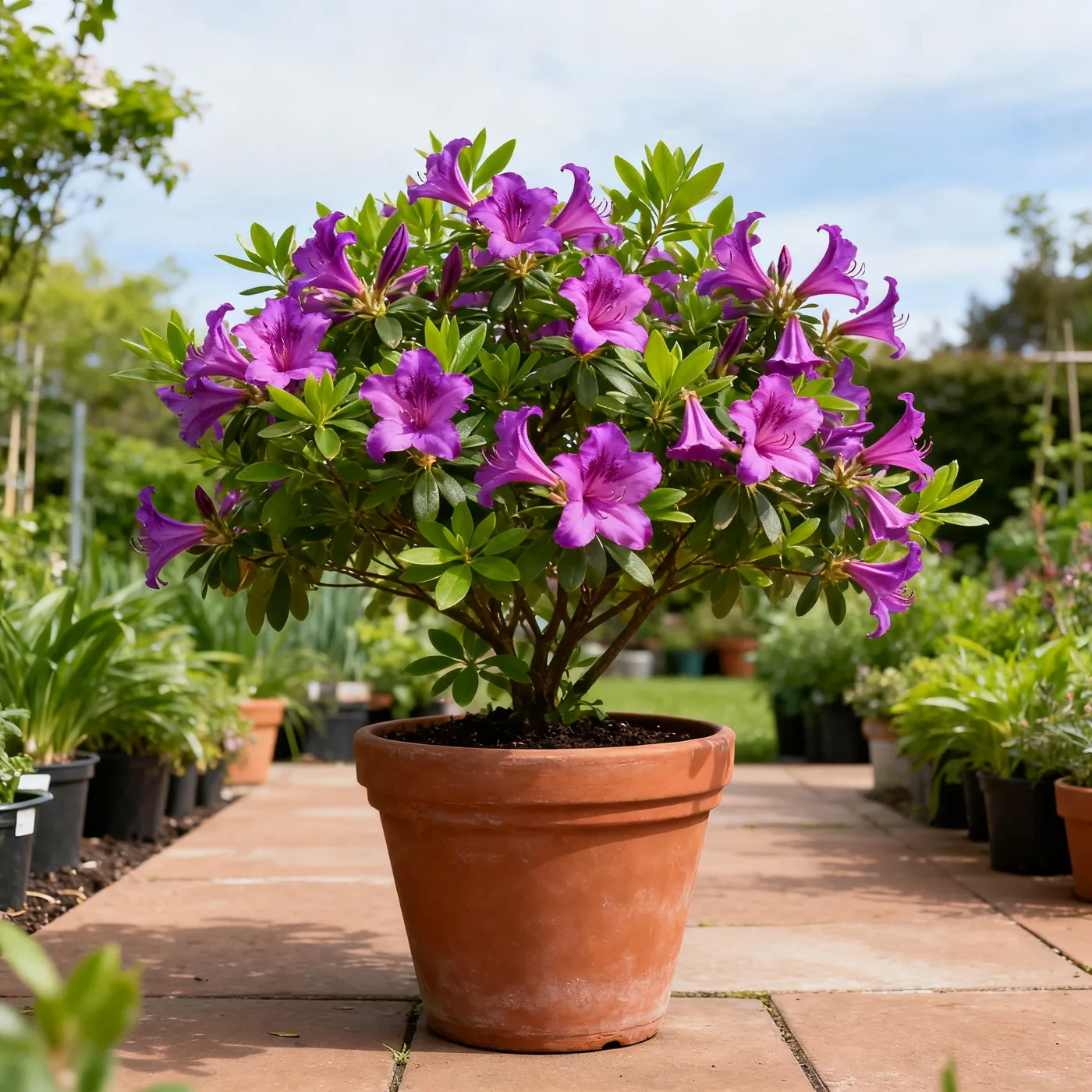
This article talks about how to read lace bug damage on Formosa Azalea, from the first stippling to bleached leaves, and how to time each treatment through the year. It answers the questions customers ask us most. Read on to learn what each sign means, how to tell lace bugs from spider mites, and when to spray so the effort pays off. Left alone, lace bugs wear down an evergreen shrub that should give you magenta flowers every spring.
Pale Stippling on Formosa Azalea Leaves
Stippling is the first sign most owners notice, and it is easy to blame on something else. Lace bugs pierce the underside of the leaf and drain the cells, and each feeding spot shows on top as a tiny pale dot. On a Formosa, the large, leathery leaves stay on the plant through winter, so every dot stays visible for months. The leaf does not heal, which means old damage is a record of what already happened, not a sign of what is happening now.
Because yellowing and speckling look alike from a few feet away, rule out the soil first. Azaleas want acid soil, and they grow best in the 4.5 to 6.0 pH range. Soil problems usually yellow the tissue between the veins. Lace bug stippling is a scatter of pale dots on a leaf that is otherwise green.
Run the Leaf Check
Do this on a dry day so you can see clearly, and do it in the same order each time.
- Pick one stippled leaf from the sunniest side of the shrub.
- Flip it over and look along the midrib and the main veins.
- Count the dark specks, any pale insects and any brown spots.
- Repeat on a leaf from the shaded side and compare.
- Write both counts down with the date, so next week you have a number to beat.
If the underside is clean, the stippling is old or comes from something else. If it is crowded, keep reading.
Brown Varnish-Like Spots Under the Leaf
The brown spots on the underside are the clearest proof that lace bugs are at work. They are the insects' excrement: shiny, dark and tarry, dotted across the leaf as if someone had flicked it with a brush of varnish. The spots collect around the feeding sites, and on a big Formosa leaf they can be dense enough to make the underside look dirty. Nothing else on an azalea leaves a mark quite like it.
One of the most common questions we get is whether those spots are a fungus. Fungal leaf spots sit in the leaf tissue and show on the top surface as well. Lace bug spots sit on the surface of the underside, and the top of the leaf shows only pale stippling.
Confirm It in Under a Minute
Press a damp white paper towel against a few of the spots. Excrement smears into a dark brown streak, while a fungal spot stays put because it is part of the leaf. A hand lens helps, since the droplets look glossy and slightly raised under magnification.
Check the leaf next to the one you tested. Lace bugs tend to cluster, so a spot-covered leaf usually has neighbors in the same state, and a single leaf with a few spots is only an early warning.
Bleached Foliage Across the Whole Formosa Azalea
When stippling merges, the whole leaf turns a washed-out gray, white or bronze, and the bush looks scorched from a distance. That is a heavy infestation that has been building for a while, usually across more than one generation of insects. Formosa is a large Southern Indica hybrid, listed at 6 to 12 feet tall, so a bleached shrub can look alarming from across the yard even when the damage began on a few branches.
Heavy bleaching rarely happens on a healthy plant in a good spot. Lace bugs build faster on azaleas that are stressed by heat, dry roots or reflected sun. Dappled sunlight or full sun is acceptable for the group, and what we tell customers is that full sun works only when the roots stay evenly moist. Our sun requirements guide covers the site side of it.
Bleaching From Insects or From Sun?
Sunscald bleaches the top of leaves that face the sun and leaves the undersides clean. Lace bug bleaching shows the tarry spots and insects below. Flip the leaf and you will know.
What Recovers and What Does Not
Bleached leaves stay bleached, even after the insects are gone. Judge your treatment by the new growth, which should come in clean and green. Do not cut back hard in the middle of an outbreak. Wait until after bloom and follow the pruning guide. In dry weather, check your watering routine too, because the same stress that invites bugs slows recovery.
Black Specks and Cast Skins on Leaf Undersides
Look closely at the underside of a badly hit leaf and you will find three things besides the tarry spots. Adults are tiny, flat insects with clear, lacy wings held over the back, which is where the name comes from. Nymphs are wingless, darker and spiny. The pale, papery husks stuck near the veins are cast skins, left behind each time a nymph grows. If you see husks, a population has been developing there for some time.
The black specks are droplets of excrement that have dried dark. The tarry spots and cast skins together separate lace bugs from the other pests that get blamed for stippling. Spider mites are the usual confusion, and our common problems guide covers them in the summer roundup.
Lace Bugs or Spider Mites?
Use this table when the picture is unclear. Check several leaves before you decide.
| What You See | Lace Bugs | Spider Mites |
|---|---|---|
| Top of the leaf | Pale dots that merge into gray or white patches | Fine, dusty stippling that turns bronze |
| Underside residue | Shiny brown or black tarry spots | No tarry spots, sometimes fine webbing |
| Insect shape | Flat with lacy wings, or spiny nymphs | Tiny specks, too small to show a shape |
| Cast skins | Pale husks near the veins | Not obvious to the eye |
| Spread | Often worst on the sunniest side | Often worst in hot, dry spells |
Tiny Nymphs Showing Up After Bud Break
If you check the leaves in spring and find tiny wingless insects, you have caught the best window of the year. Lace bugs overwinter as eggs on the undersides of leaves, and an evergreen like Formosa gives them last year's foliage to hide in. The eggs hatch as the plant wakes up and pushes new growth. The first nymphs are soft and slow, and they feed in groups beside the midrib, which makes them far easier to reach than the winged adults later on.
Southern Indica bloom runs from late March into early April. The nymphs usually follow soon after, as the new flush opens. Our bloom time guide will help you pin down when that falls in your area, since the timing shifts with the weather each year.
Why Acting Early Matters
Nymphs have not yet built up the numbers that overlap generations and make summer control harder. Treat them in spring and you cut the population before it climbs. Wait until midsummer and you are chasing adults that fly between shrubs.
How to Check Each Week
From the end of bloom, flip a few leaves on new growth once a week. Look for small, dark, spiny nymphs and fresh brown spots. When you find the first ones, move to the treatment plan below the same week.
Timing Treatments Across the Season for Formosa Azalea
Treatment works only when it reaches the underside of the leaf, where the insects live. Insecticidal soap and horticultural oil kill on contact, so a spray that wets only the tops of the leaves does nothing. On a Formosa that can reach 12 feet, plan on a sprayer with a wand, and cover the lower leaves first, since they are the ones you can inspect. Follow the label, and ask your local extension service which products and dates suit your area, because local timing varies.
Keep pets and children off wet foliage. The ASPCA lists azalea as toxic to dogs, cats and horses, so let the spray dry before they return. Avoid spraying open blooms.
The Season in Order
Use this sequence and adjust it to when your shrub blooms.
- Late winter: flip leaves and look for old tarry spots. Note where they cluster.
- During bloom, late March to early April: do not spray. Inspect only.
- Right after bloom: start weekly checks on new growth.
- At the first nymphs: spray the undersides with soap or oil, then repeat as the label allows.
- Early summer: check again, since eggs survive a spray and hatch later.
- Midsummer: re-check the sunniest side and spray again if you find fresh nymphs.
- Late summer to fall: make a final check and record your counts.
Keeping Formosa Azalea Clear of Lace Bugs Next Year
Prevention is mostly about removing the conditions that let lace bugs build up. Give Formosa dappled light, since heavy shade causes weak growth and fewer flowers, so deep shade is not the cure either. Keep the root zone evenly moist, mulch it, and keep the soil acid. A shrub that grows steadily can shrug off a few insects, while a stressed one cannot.
The other half is habit. We often see people treat hard in a bad summer and then forget the plant until the next bleached leaves appear. A short, recurring checklist keeps that from happening.
The Recurring Checklist
Run through these points on a set day each month through the growing season.
- Flip at least two leaves, one from the sunny side and one from the shaded side, and compare against last month's counts.
- Look for new brown spots, which show activity even when no insects are visible.
- Check the soil moisture a few inches down, especially in a dry spell.
- Check any neighboring azaleas, since adults move between shrubs.
- Record what you find and what you did, so the next season starts with a map of the trouble spots.
Lace Bug Control Comes Down to Looking Underneath
The signs run in a clear order: pale dots on top, tarry spots below, then bleached leaves, and finally cast skins and nymphs. Each one tells you how long the insects have been there. Catch them at the nymph stage, spray the undersides, and keep the shrub watered and in good light, and Formosa shrugs off most outbreaks.
Your dated schedule for next season: check in late winter, inspect during bloom in late March to early April, begin weekly checks right after bloom, spray when nymphs appear, re-check in early summer and midsummer, and record your counts in fall.
Formosa Azalea
Nursery-grown Formosa Azalea in sizes from 1 Gallon, shipped to your door.
From $29.95
Shop Now →Lace bugs take hold on stressed shrubs, so our growers raise Formosa on our farms in dappled light and acidic, free-draining soil with plenty of organic matter, the kind of bed where the plant stays vigorous. Every plant we sell, whether a top-quality shrub, tree or grass, is grown on our own farms, never bought in. If you are ready to give a healthy Formosa a spot in your yard, browse what is in stock now.