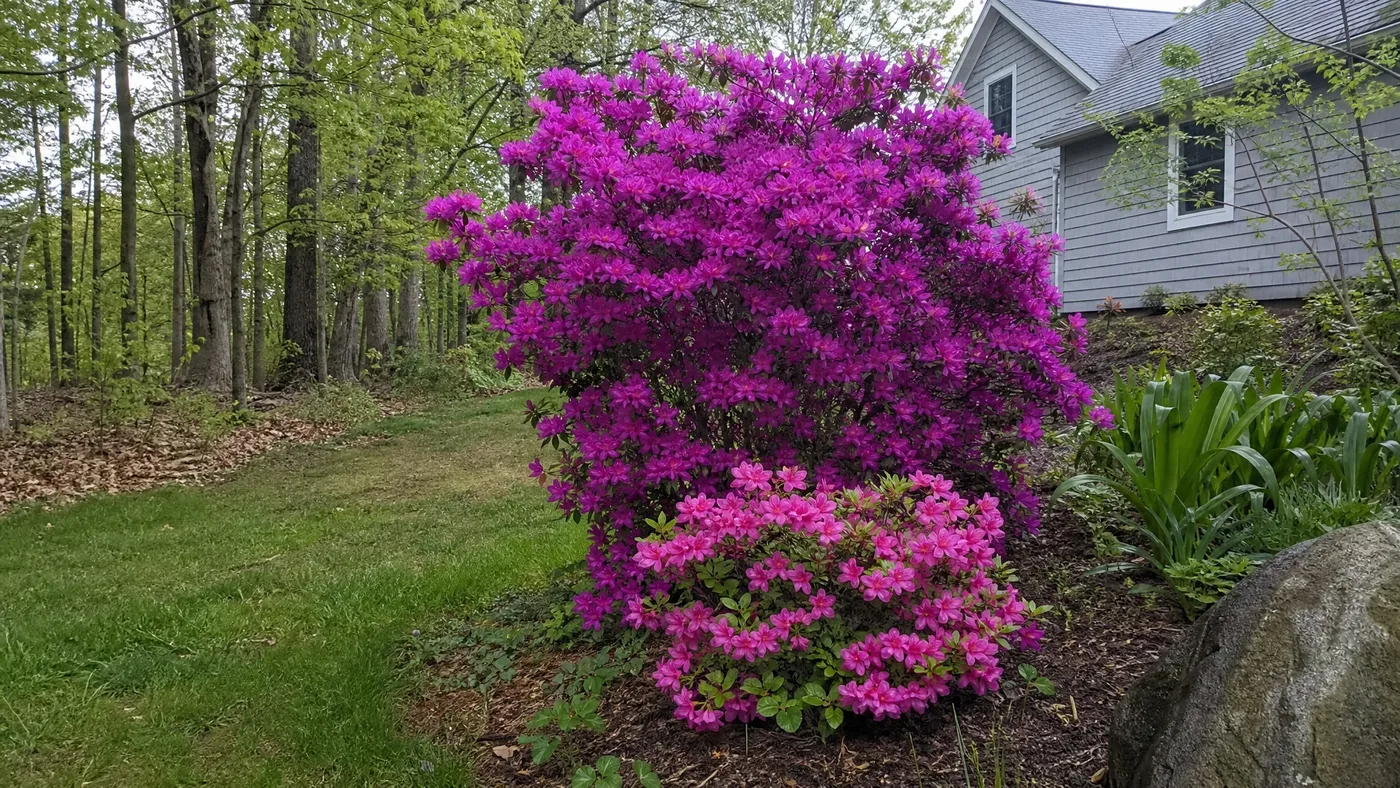
Formosa Azalea vs Encore Azalea: Which Should You Plant?
Rebloom is the habit of flowering more than once in the same growing year. A shrub that reblooms sets fresh buds after its first flush fades, so color returns in summer or fall instead of ending with one burst in spring.
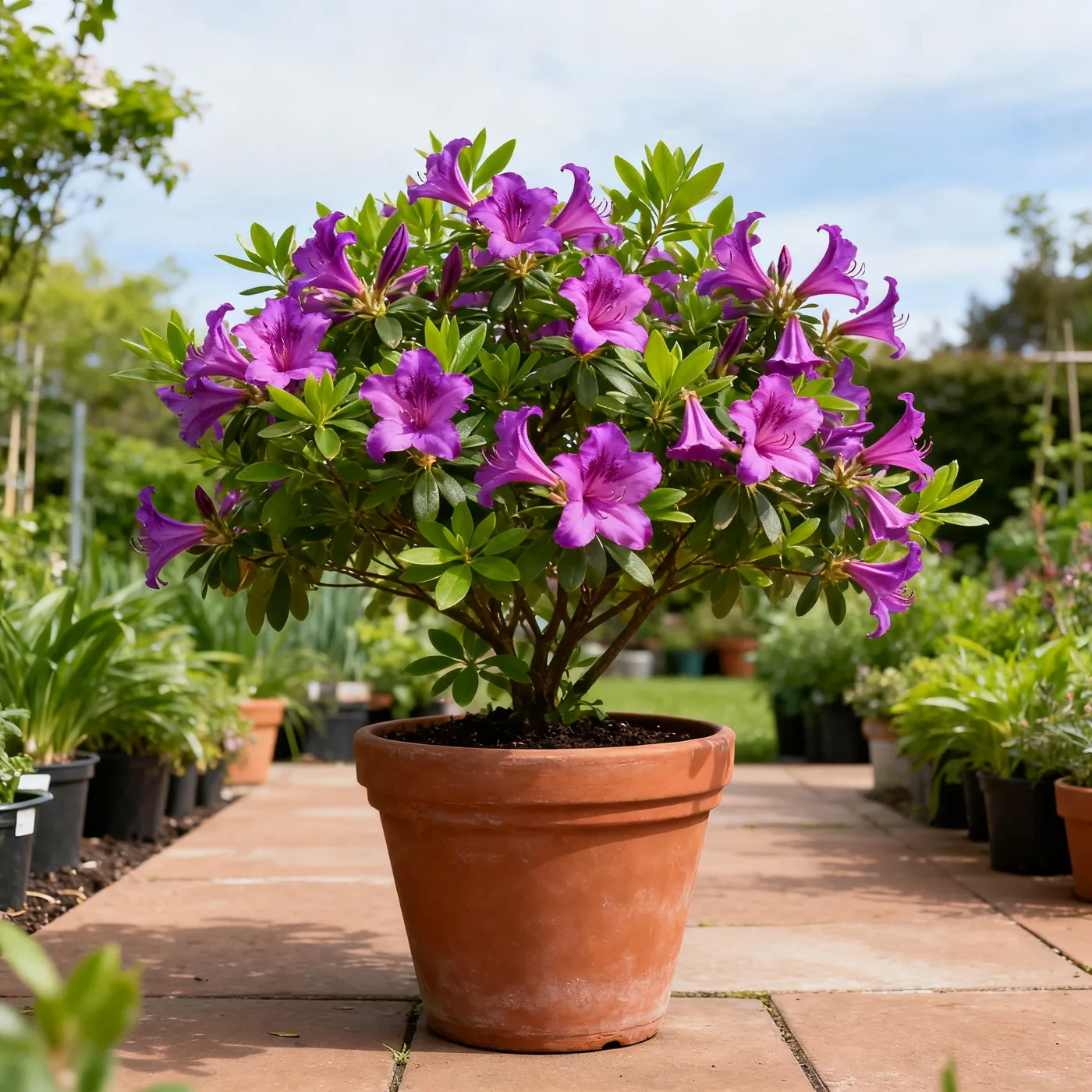
That one trait changes what a flowering shrub gives you, and it also changes what the shrub asks in return: more size or less, more cold tolerance or less, more attention or less. Two azaleas get compared on exactly this point. Formosa Azalea is a large Southern Indica that blooms once each spring, and Encore is a reblooming series with a smaller habit.
Below, you'll find out all about how to choose between them, including mature size, bloom pattern, cold hardiness, soil and light, yearly upkeep, and how the two look together in a border.
What Mature Size Means for Formosa Azalea
Mature size is the height and width a shrub reaches after many years in the ground, not what it measures in the pot. Buying by pot size is a bit like buying a child's coat by how it fits in October: it tells you nothing about the winter two years from now. Mature size decides how far the plant belongs from a window, a walkway or a property line.
Formosa is a Southern Indica hybrid, and the Southern Indica group grows 6–12 feet tall and 6–8 feet wide. That is a shrub you plant to fill a corner or screen a wall, not one you tuck under a window. Expect it to keep gaining height for years.
Encore has the opposite habit. Mississippi State Extension says all Encore varieties are smaller than Southern Indicas, usually topping out around 36 to 42 inches tall. Some run larger: the Arkansas Extension puts Autumn Amethyst at about 4 to 5 feet, while Autumn Bonfire stays near 3 feet tall and 3.5 feet wide.
Verdict: Encore for tight spaces, Formosa for big ones. One of the most common questions we get is whether Formosa can be kept at Encore size by pruning. It can't, at least not without constant shearing that costs you flowers, so choose the size you have room for.
One Heavy Bloom or Three Lighter Ones?
Formosa flowers once a year. The Southern Indica blooming period begins in late March and extends to early April, and Formosa's magenta flowers cover the shrub during that window. After that it is green until the next spring.
Encore follows the same spring show, then keeps going. In Arkansas, these hybrids provide the traditional spring display during March and April and bloom again in the fall, usually during September or early October. Summer flowers are not unusual, and the fall show can be strong.
Reblooming is usually sold as a pure bonus, and we would push back on that a little. The later flushes are lighter than the spring one, and a heavy single flush makes a better picture than three modest ones. Fall timing also shifts with your climate, so ask your local extension service when to expect it where you live.
Verdict: Formosa for spectacle, Encore for steady presence. If you want one week each spring that stops traffic, Formosa delivers it. If bare-looking months bother you, Encore is the better answer.
Cold Hardiness and Where Formosa Azalea Can Live
A hardiness zone is a band on the USDA map based on a region's average lowest winter temperature. Lower numbers mean colder winters, and a plant rated for your zone should get through its usual winter low. It is a guide rather than a guarantee, since an unusually harsh winter can still damage a rated plant.
The table lines up what the extension sources say about each plant.
| Plant | Zone range | Source |
|---|---|---|
| Southern Indica hybrids (Formosa's group) | 6a–9b | |
| Encore azaleas | 6–10 | Mississippi State |
| Encore azaleas, practical advice | Zone 7 and south | Arkansas Extension |
Read the Encore rows with care. They do well in USDA zones 6-10, but the Arkansas Extension notes that different parents were used for the various cultivars, so there is still a bit of uncertainty about winter hardiness. The Southern Indica group, by contrast, has one clear range.
In practice, Zone 6 gardeners see both plants on paper, but only the Southern Indica range is firmly documented. Zone 10 gardeners are outside the range listed for Formosa's group. Our Formosa hardiness guide covers the cold edge in more detail.
Verdict: a draw in zones 7 to 9. In Zone 6 we lean toward Formosa for its firmer record, and in Zone 10 Encore is the only one of the two listed. At either edge, check with your local extension service before you buy.
Soil, Sun and Water Demands Compared
This is the one criterion where the two plants barely differ, because both are azaleas with the same root habits. Azaleas grow best in acid (4.5–6.0 pH), well-drained soils high in organic matter. If leaves turn yellow while the veins stay green, soil that is not acidic enough is the first thing we check.
For light, dappled sunlight or full sun is acceptable for the Southern Indica group. Heavy shade causes weak growth and fewer flowers. A shrub that blooms three times a year has even more reason to want decent light, so we would not put either one in deep shade.
Water follows drainage. Both want even moisture and neither tolerates soggy ground, so a site that stays wet after rain is wrong for either plant. Raised beds or a mounded planting fix most of these sites.
For the detail, our guides on soil for Formosa Azalea and Formosa sun requirements go step by step. What applies to one applies to the other, so this criterion should not decide your choice.
How Much Work Each Azalea Asks of You
Work comes in three forms with azaleas: pruning, feeding and deadheading. The two plants spread those jobs differently, and that difference is worth more than any single task.
Pruning and Shaping
Formosa has one pruning window each year, right after the flowers fade, because it sets next year's buds soon after. Because it is large, that one job can mean a ladder and a good hour. Our pruning guide covers how far to cut.
Encore at 36 to 42 inches rarely needs shaping at all. If you do trim, we tell customers to keep it light and finish soon after the spring flush, so you do not cut off buds for the later bloom.
Feeding and Deadheading
Both plants do best with acid-forming fertilizer and a mulched, acidic bed. A plant that flowers several times a year plausibly draws more from the soil, so we keep Encore's feeding regular and Formosa's simple. Check the label and your local extension service for rates and dates.
Deadheading is optional for both. On Formosa's size it is rarely practical, while a 3-foot Encore can be tidied in minutes. These are the jobs we would plan for:
- Formosa: prune once, right after the spring flowers fade, and leave it alone the rest of the year.
- Formosa: expect to water and mulch generously for the first year or two while the root system builds.
- Encore: trim lightly after the spring flush, then stop so the later buds stay.
- Encore: keep feeding and mulching steady, since it flowers across more of the year.
Verdict: Formosa asks for one big job, Encore for several small ones. If you dislike ladders, choose Encore. If you dislike remembering things, Formosa is simpler.
Formosa Azalea Beside Encore Azalea in a Mixed Border
In a planting design, the two azaleas do different work. Formosa is the large magenta anchor, and Encore is the low, smaller shrub that fills in around it. Together they can give a border two peaks instead of one, as long as you place them with their sizes in mind.
Placement and Layers
Give Formosa the back or corner of the bed, with room for a width of 6–8 feet. Put Encore in front, where its 3-foot habit stays visible. Reversed, Encore disappears behind a shrub that can reach 6 feet or more. Our landscape ideas guide has companion plants that suit this layering.
The Southern Indica group is frequently damaged by deer. The sources we use say nothing about Encore on this point, so if deer visit your yard, ask your local extension service before planting either one.
Color Timing
Formosa peaks from late March to early April, when Encore is also in its spring flush. In fall, Encore carries the border while Formosa is plain green. In our rows, we notice magenta fights with some pink and orange tones, so choose an Encore flower color that sits calmly beside it.
Verdict: the pair works better than either alone, if you have the room. Formosa supplies the drama and Encore supplies the encore.
Choosing Formosa Azalea When Space Is Generous
Choose Formosa if you have room for a shrub in the 6–12 foot range and want one large spring show. It suits corners, screens and the back of a bed. It also suits you if you prefer a single pruning job and a plant that is simply green for the rest of the year.
Choose Encore if the space is closer to 3 or 4 feet, or if you want flowers that return in fall. It fits beneath windows and along walks, and it makes sense in Zone 10. We grow Formosa, and we pot each plant so it can go straight into the ground when it arrives.
Neither choice changes one fact: azalea is toxic to dogs, cats and horses. If animals share your yard, our guide on toxicity to pets and children is worth reading before you plant either one.
Matching Formosa Azalea or Encore to the Buyer
The two plants answer different questions. Formosa gives a big, heavy bloom in late March and early April on a shrub that grows 6–12 feet tall. Encore gives a smaller shrub, usually 36 to 42 inches, with flowers that return in summer and fall.
Soil and light are the same for both, so size, bloom pattern and cold limits are what should decide it. The rule of thumb: plant Formosa if you have room for a wide shrub and want one great spring show, and plant Encore if your space is small or you want color to return in fall.
Formosa Azalea
Nursery-grown Formosa Azalea in sizes from 1 Gallon, shipped to your door.
From $29.95
Shop Now →Our Formosa Azaleas grow on our own farms, where the beds stay a little sour, drain quickly and sit under filtered shade. We grow and sell top-quality plants from our own farms, so if the big March bloom is what tipped your choice toward Formosa, begin with a Formosa from our shop.