Formosa Azalea Colors: Red, Pink, Lavender and White
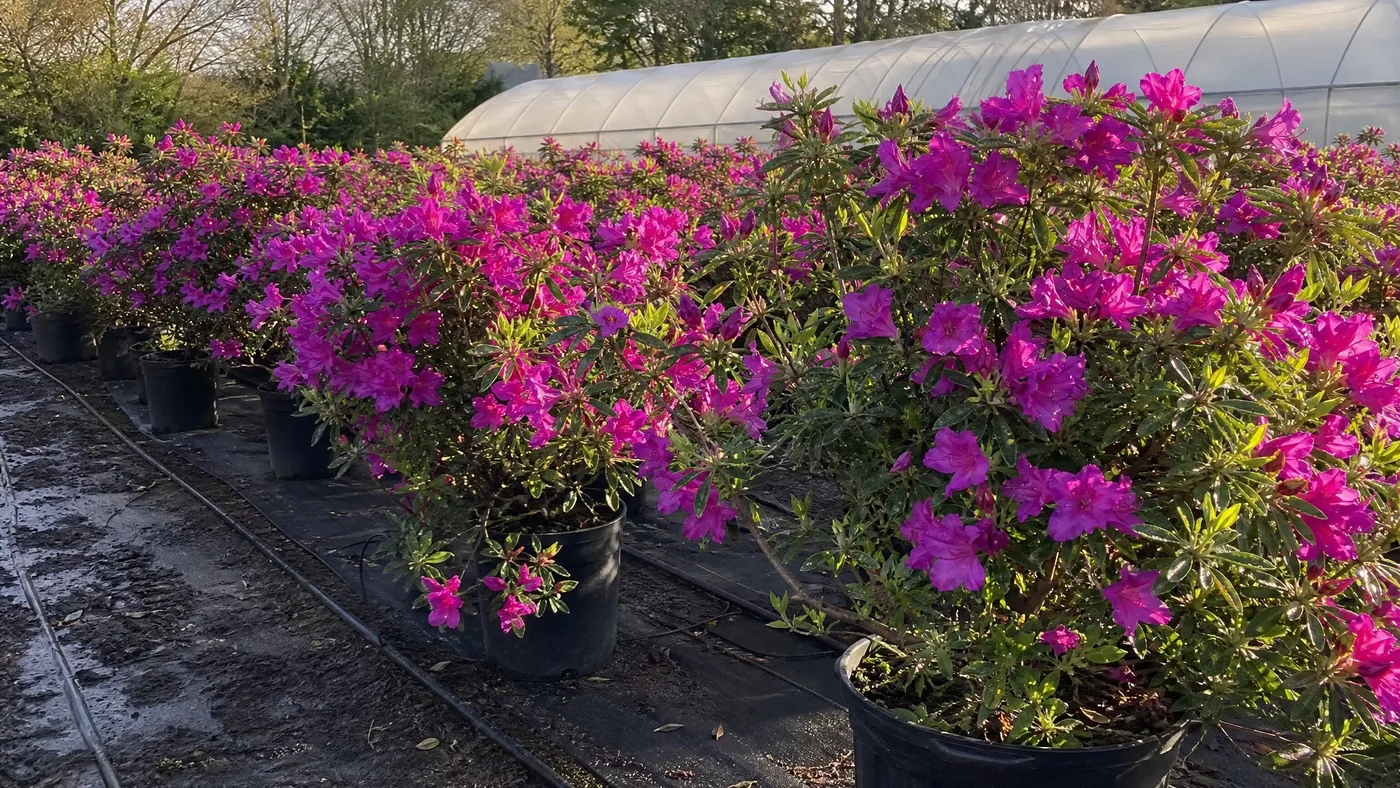
At first light in our growing rows, a Formosa azalea in bloom throws a glow before you can put a name to the color. It is not quite pink and not quite red. It is a saturated magenta that hums against the dark evergreen leaves and the gray of an early morning.
That glow is why so many people go looking for Red Formosa, White Formosa, Lavender Formosa and Pink Formosa, and then wonder which one they are looking at. The name on a tag and the plant in the ground do not always agree, and when they do not, you get a different bloom than the one you pictured.
Below, you'll find out all about Formosa azalea colors, including which bloom is the true Rhododendron 'Formosa', how the red, white, lavender, pink and Phoenicia names sort out, and how to read a listing before you buy.
The Magenta Row That Stops Every Visitor
Clemson describes 'Formosa' as a Southern Indica azalea with large magenta flowers, and the plain wording undersells the effect. Southern Indicas are vigorous, upright growers, often 7 to 10 feet or more, so a mature plant does not whisper. Blooms crowd the branches until the leaves nearly vanish, and the color carries across an entire yard.
Magenta sits between pink and purple, with a good deal of red in it. That is why people describe the same flower four different ways. Some see hot pink, some see red, some see purple, and a few see lavender on a gray morning. Each description is an honest reaction to one plant, and that is the source of most of the confusion around Formosa azalea colors.
What the Bloom Looks Like Up Close
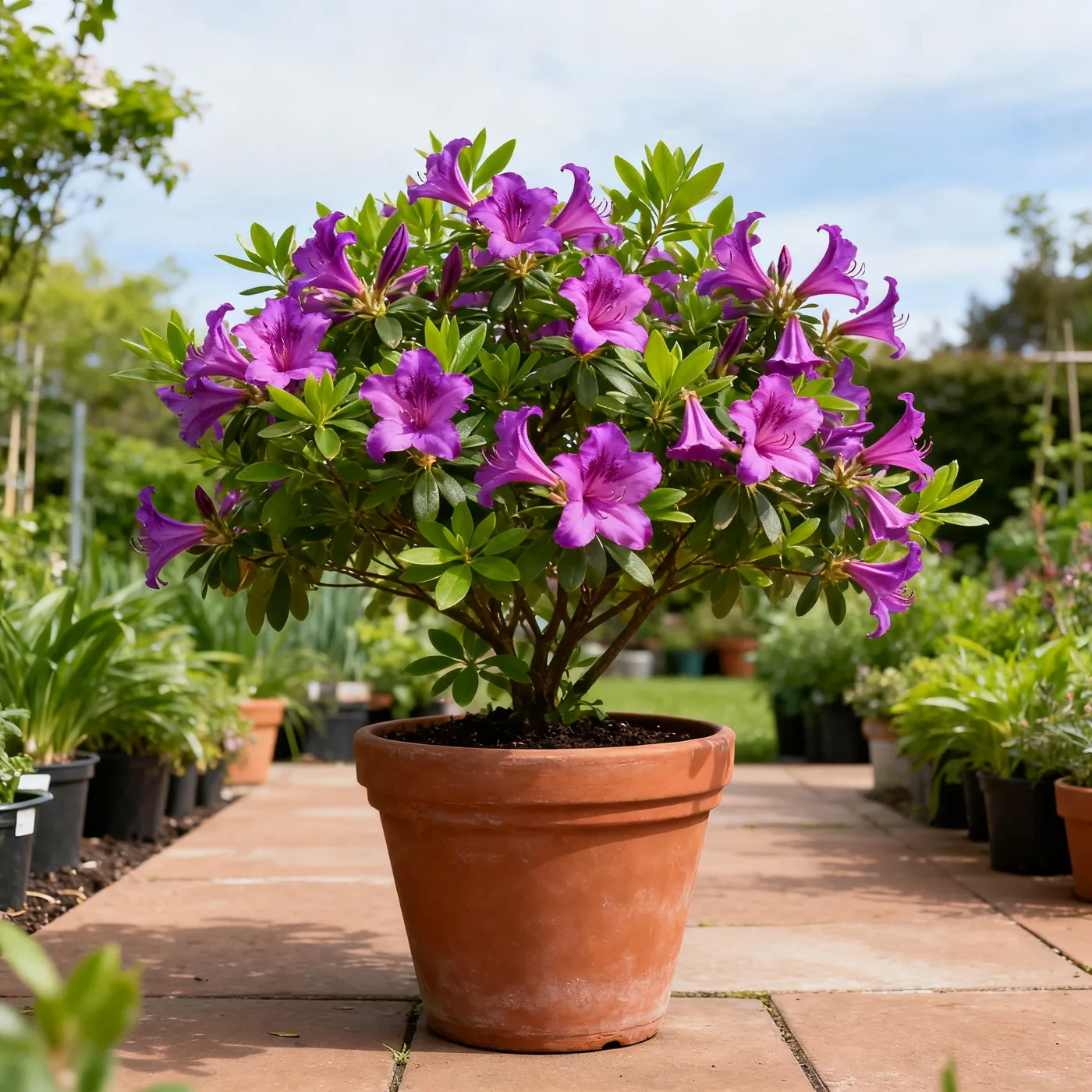
Look at a single flower and you will find a wide, open funnel of petals, large for an azalea, in one even shade of magenta. The original does not show a white edge or striping. That uniformity matters later in this guide, because a plant sold as Formosa that opens with a pale edge or a different base color is telling you something about its name.
Timing the Display
The Southern Indica blooming period runs from late March into early April, which makes Formosa an early-spring show. Bloom times also vary by variety within each group, which gives you a useful test: a plant sold under a Formosa color name that opens on a noticeably different schedule may be another cultivar. Our guide to Formosa azalea bloom time covers the schedule in more detail.
Which Color Is the Original Formosa Azalea?
The original Rhododendron 'Formosa' is magenta, an orchid-toned magenta that leans toward reddish purple. Among popular Southern Indica azaleas, 'Formosa' (magenta) sits beside cultivars of other colors. That tells you the name belongs to one color and not to a family of them. A seller who describes something else is describing a different shrub.
'Formosa' is among the named Southern Indica hybrid cultivars, alongside 'Brilliant', 'George Tabor', 'G. G. Gerbing' and 'Pink Ruffles'. Each of those is its own cultivar with its own name. A cultivar name is a promise of one specific plant, and 'Formosa' has always been attached to the magenta one.
How to Check a Plant Against the Name
Cultivars are propagated from cuttings, so every plant of one cultivar should match the others in flower color, size and timing. If a batch sold as Formosa opens in mixed colors, the batch is mixed, whatever the label says. A single plant that opens a different color from its neighbors was either mislabeled or is a different cultivar in the wrong pot.
Pale Flowers Are Not a New Color
A true Formosa can look washed out for reasons that have nothing to do with its name. Heavy shade causes weak growth and a reduction in flower production, so a shaded plant carries fewer, thinner blooms. Azaleas also grow best in acid soil, pH 4.5 to 6.0, and a plant struggling outside that range looks tired all over. Fix the site first, using our notes on Formosa azalea sun requirements, before you decide the plant is the wrong color.
Red, White and Other Formosa Azalea Trade Names
Search any plant listing and you will find Red Formosa, White Formosa, Pink Formosa and Lavender Formosa. We treat each of these as a trade name or a separate selection, not as a color form of the original. A cultivar is one specific plant, and the original is magenta.
The colors people ask for already have proper names. Popular Southern Indica azaleas include 'Mrs. G. G. Gerbing' (pure white), 'George L. Tabor' (orchid pink), 'Judge Solomon' (light pink) and 'Pride of Mobile' (rose pink). If you want white or pink in this group, those are plants with their own records.
Customers usually ask us whether a Red Formosa is just a deeper form of the original. Our answer is that you cannot assume it. Magenta already carries a lot of red, so a seller may apply the word to a plant that is simply magenta, or to a different cultivar altogether. Without a cultivar name on the listing, you have no way to tell which.
A Quick Sort of the Names You Will Meet
The table below lists the names we see most often and what we suggest doing with each one.
| Name on the listing | What it most likely means | What to do |
|---|---|---|
| Formosa | The original magenta Southern Indica | Buy with confidence |
| Red Formosa | A trade name or separate selection | Ask for the cultivar name |
| White Formosa | A different white cultivar | Ask which white it is |
| Pink Formosa | A different pink cultivar | Ask which pink it is |
| Lavender or Purple Formosa | Magenta in cool light, or a separate selection | See the next section |
| Formosa Phoenicia | A separate name used beside Formosa | Confirm color and timing first |
Size and Growth Belong to the Cultivar
Color is not the only thing a label can get wrong. Southern Indica size ranges by cultivar, with the group running 6 to 12 feet tall and 6 to 8 feet wide. A plant sold under a Formosa name that matures at a very different size is a different plant. Our comparison of Southern Indica cultivars sets them side by side.
Lavender Blooms on a Formosa Azalea in Morning Light
Lavender is the color customers describe most often when they are unsure what they have, and the searches follow: lavender Formosa, purple Formosa, Formosa azalea lavender. Our read is that most of these sightings are the original magenta seen in the wrong light. Southern Indica bloom colors run from bright yellow to purple, depending on the cultivar. Purple-toned cultivars exist, but that range belongs to the group, not to Formosa.
How Light and Age Shift the Look
Magenta has blue in it, and cool light brings the blue forward. Early morning, overcast skies and open shade all push Formosa toward orchid and lavender tones, while hot afternoon sun pushes it toward red. Photos taken at dusk, or on a phone that adjusts white balance on its own, exaggerate the shift. Flowers also soften as they age, so a bloom in its last days can look paler than one that opened that morning.
Try this before you decide your plant is lavender. Go out at midday, stand in open daylight and look at the flowers again. If the color warms to magenta, it is Formosa behaving normally. If it stays a clear lavender in every light, you have a different cultivar and the seller owes you its name.
What to Expect on Arrival
Plants often arrive well outside bloom season, so the first thing you see is foliage, not flowers. That is normal, and it means you cannot judge color on delivery day. What we tell customers is to check the tag for the cultivar name, plant it well, and wait for the first flowers. The Southern Indica group suits zones 6a through 9b, so confirm your zone before you order.
Our planting guide keeps the first spring on track, since a stressed young plant opens fewer and thinner flowers.
Pink Formosa Azalea and the Formosa Phoenicia Puzzle
Pink is the other color people attach to Formosa, and it is where the names tangle most. Magenta leans pink in a quick description, so it is easy to see how the word slips into a listing. Yet 'George L. Tabor' is orchid pink, 'Judge Solomon' is light pink and 'Pride of Mobile' is rose pink. Each is a different plant, and a Pink Formosa listing could point to any of them.
Telling Pink From Magenta
Photograph the bloom against a white sheet of paper in open shade at midday. A magenta flower looks saturated and dense against the white, while a pink one looks lighter and softer. If you suspect a rose pink, our comparison of Formosa and Pride of Mobile explains how those two differ.
Sorting Out Formosa Phoenicia
We often see Phoenicia and Pink Formosa used interchangeably in listings, which is a good reason to slow down. We have no extension source that describes a Phoenicia form of the Southern Indica azalea, so we treat it as a separate name until a seller shows the plant is the same cultivar. We would not call it the original on the strength of the name alone.
Three questions settle most cases. Ask which cultivar is on the tag, what color the open bloom is, and when it opens. If the answers are magenta and late March to early April, it behaves like the original. If you hear pink, or a different schedule, you have your answer.
Reading Formosa Azalea Color Names Before You Buy
Treat every color word in a listing as a claim to check, not a fact. The habit takes a few minutes and prevents the most common disappointment, a shrub that blooms nothing like the picture. Start with the cultivar name, then the photo, then the plant itself in bloom. Our Formosa azalea buying guide covers container sizes, and this section covers the color side.
Five Questions for Any Seller
Put these to a seller before you pay, in this order.
- Ask for the cultivar name in writing. A listing that says only "Red Formosa" or "White Formosa" has not told you what is in the pot.
- Ask for a photo of the actual plant in bloom. Stock images and cool-light photos drift toward lavender, so ask for one taken in open daylight.
- Ask when it blooms. The Southern Indica window is late March to early April, and a plant on a clearly different schedule is probably another cultivar.
- Ask how tall and wide it grows. Compare the answer against the 6 to 12 foot height of the group.
- Check your zone. Southern Indica hybrids are listed for zones 6a through 9b, and a color you love will not help a plant that cannot survive your winters.
Look at the Plant in Bloom
If you can visit a garden or nursery in late March or early April, look at the shrub itself in open daylight. Compare it with the description: large flowers, one even magenta. Nothing replaces a plant in front of you. When you order a Formosa from us, you get the magenta one, and the tag names the cultivar so you know exactly what you are planting.
A Magenta Formosa Azalea in Full Bloom
The original Rhododendron 'Formosa' is magenta, and the Red, White, Lavender, Pink and Phoenicia names are labels to check, not colors to trust. White and pink in this group already belong to named cultivars of their own. Ask for the cultivar, a photo of the real plant and the bloom window, and you will rarely be surprised.
Picture it on a still morning in late March: an upright shrub thick with large magenta flowers, side-lit by low sun, every petal the same deep color. That is Formosa, and whatever the tag called it along the way, a name is only a label. The plant is what you will be looking at every spring.
Formosa Azalea
Nursery-grown Formosa Azalea in sizes from 1 Gallon, shipped to your door.
From $29.95
Shop Now →We grow our Formosa on our farms in acidic, well-drained, organic-rich soil with dappled light, and our own growers raise and pack every plant. Every Formosa we ship is potted and packed so it arrives ready to plant. Pick out a Formosa for your own garden in our shop.